Why the sediment matters as much as the water
Water drains or gets pumped out within hours. Sediment stays. A quarter inch of silt across a basement floor holds moisture against the slab, packs into carpet tack strip and door tracks, and carries the same contamination the water did. Until it is removed, dehumidifiers struggle, and any drying readings are misleading because wet mud sits on top of the surfaces being measured.
The soils around Castle Rock include sandy granite grit from the ridges as well as clay that turns slick and heavy when wet. Sandy sediment settles quickly and shovels easily. Clay-rich mud stays suspended longer, coats walls in a thin film, and dries into a hard crust that cracks and turns to dust when disturbed. Both should be treated as contaminated material.
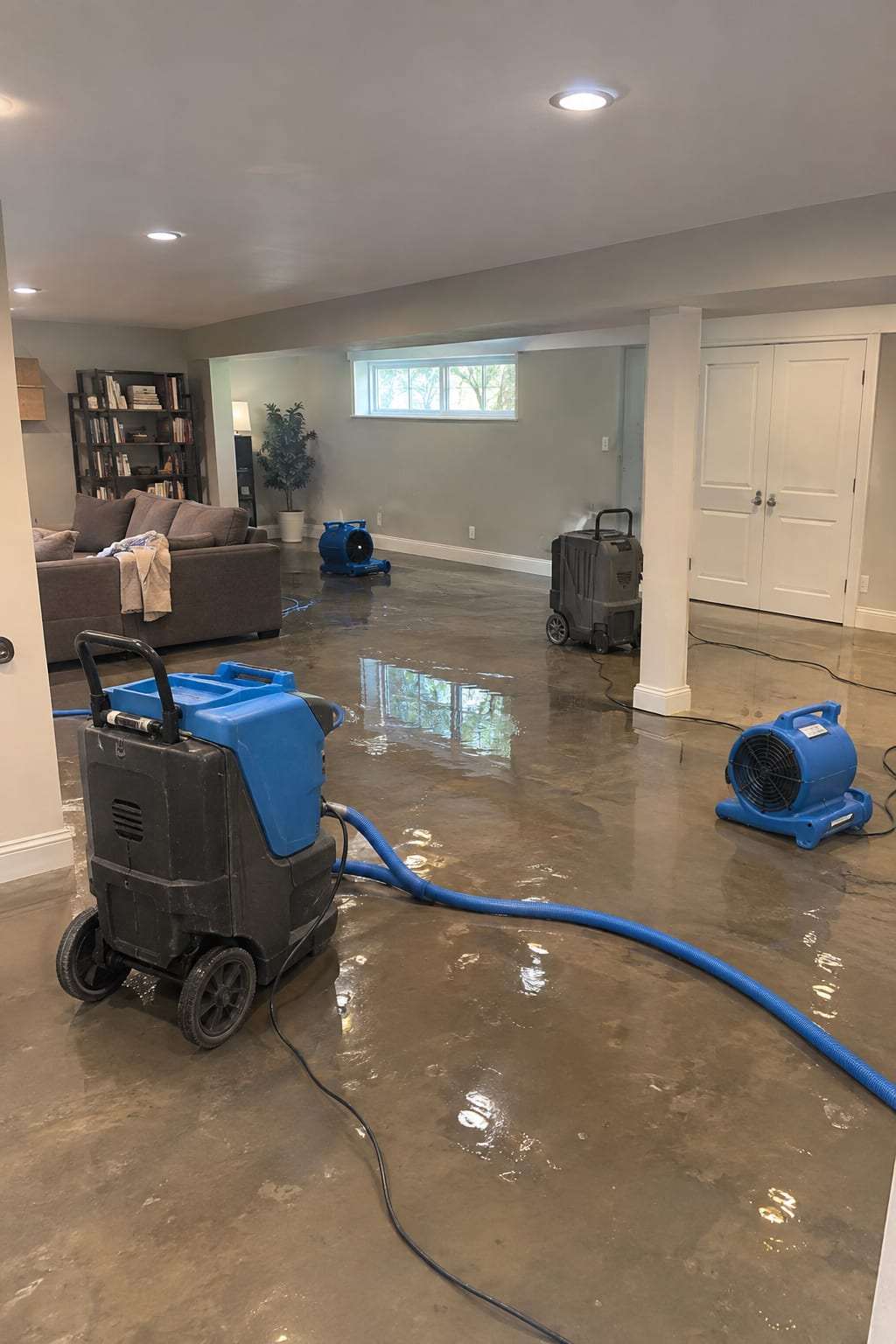
A practical order for getting mud out
Protect yourself first
Rubber boots, waterproof gloves, eye protection and long sleeves. If mud is drying and dusty, a well-fitted N95 respirator helps.
Remove loose contents
Carry out rugs, boxes and furniture so there is a clear floor. Photograph items before they go to the curb.
Shovel the thick layer
Use a flat square shovel and contractor bags or a wheelbarrow. Do not wash heavy mud down a floor drain; it can clog the line.
Squeegee and wet-vac the thin layer
Work from the far wall toward the exit, keeping the remaining silt wet so it moves instead of smearing.
Rinse and repeat
A light rinse followed by another extraction pass lifts residue. Several passes are normal on textured concrete.
Clean before disinfecting
Disinfectants work poorly on dirty surfaces. Scrub with a detergent solution, rinse, then apply a disinfectant according to its label.
Where mud hides and how it is usually handled
| Location | What happens | Typical handling |
|---|---|---|
| Under carpet and pad | Silt filters through and packs against the slab | Carpet and pad removed, slab shoveled and scrubbed |
| Tack strip and baseboard | Sediment lodges in nails and gaps | Usually removed and replaced |
| Wall cavities | Silt settles in the bottom plate behind drywall | Opened with a flood cut, vacuumed and cleaned |
| HVAC returns and floor vents | Mud washes into duct runs | Inspected and cleaned before the system runs |
| Floor drains and sump pits | Sediment settles and blocks flow | Cleared and flushed, pump checked |
| Window wells | Mud and debris pile up against the glass | Shoveled out, drain at the bottom cleared |
General information for Castle Rock, not a quote or professional advice. In an emergency, call 911.