A field guide for Castle Rock and Douglas County
Flood cleanup in Castle Rock starts at the mud line
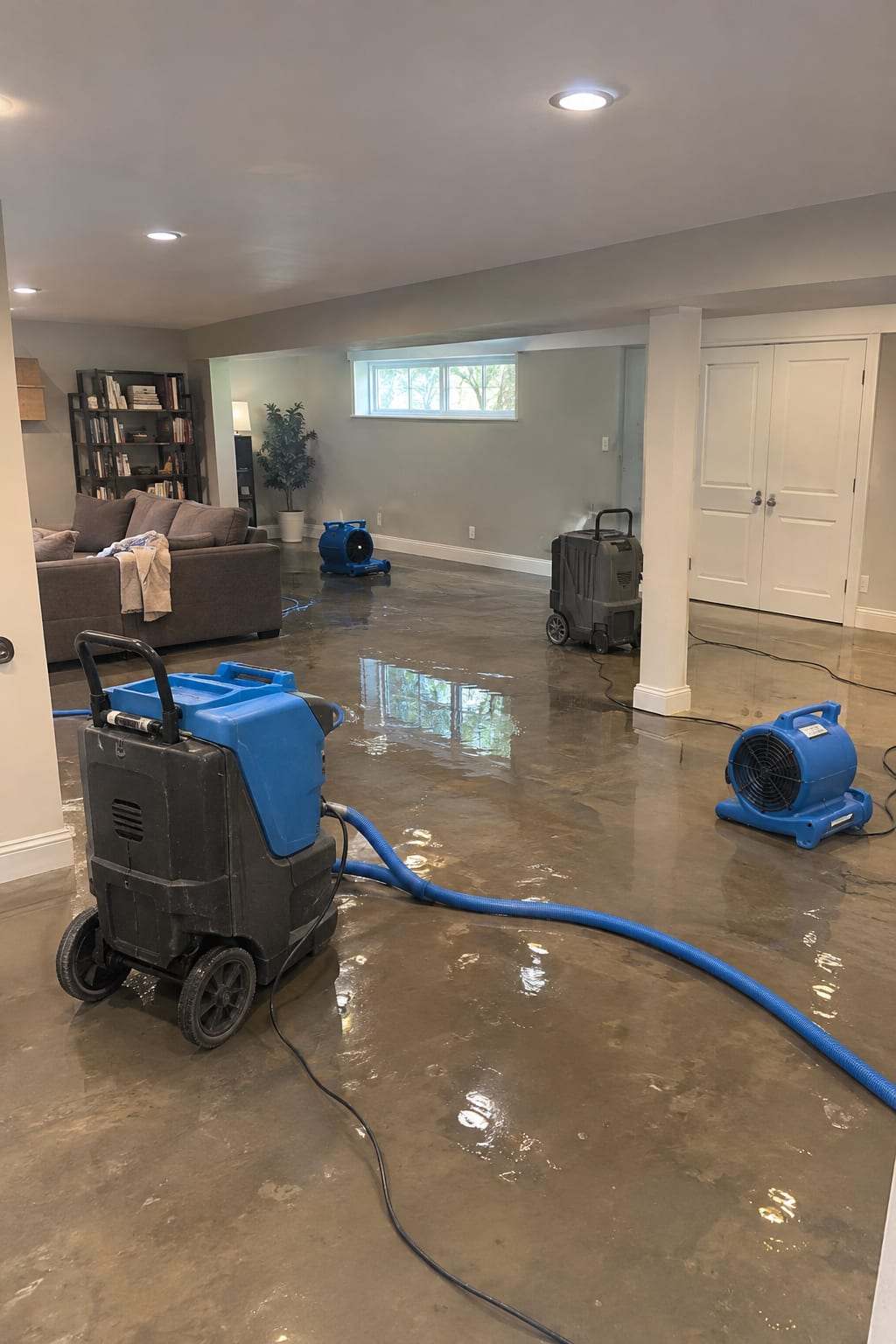
When a summer cloudburst pushes runoff under a walkout door, the water brings silt and sewage in with it. This guide covers what has to come out, what can dry in place, and what to photograph before anyone starts cutting drywall.
Draft guide. No phone line or request form is connected, so this site cannot send anyone to you. Read the draft status.
Before you touch anything
The first hour
Most of the expensive mistakes after a flood happen in the first sixty minutes: a breaker flipped while standing in water, a furnace switched back on, a soaked rug dragged out before anyone took a photo.
- Stay out of standing water until power to that level is off. Flip the main breaker only from a dry spot; otherwise ask the electric utility to cut service.
- If you have to walk through floodwater, wear rubber boots and gloves and keep it off your skin.
- Leave the furnace, water heater and any appliance that sat in water switched off until a technician checks it.
- Photograph every wall and the water line before anything moves, then call your insurance agent. Flood is usually a separate policy.
Before you hire anyone, ask who answers after hours and how long the drive to Castle Rock takes.
Outside water is dirty water
Water from outside carries silt, sewage and lawn chemicals. Anything soft it soaked usually leaves the house.
Runoff from a flash flood, an overflowing swale or East Plum Creek crosses lawns, streets and septic fields before it reaches your floor. Restoration standards call it Category 3 water. Carpet pad, insulation and drywall it soaked usually get cut out and hauled away, and every surface left behind gets cleaned and disinfected.
The clock starts when the water stops. Drywall wicks moisture above the stain, framing soaks it up, and mold can start within 24 to 48 hours. Get the water and mud out, remove what can't be saved, sanitize, then dry while someone logs moisture readings. Your insurer will ask for those photos and readings.
Name the source first
Storm water or a burst pipe?
Castle Rock gets both: July runoff down the hillsides and January supply lines that freeze and split. They look the same on the carpet and get cleaned up very differently.
- Comes in through doors, window wells, foundation cracks or backed-up drains
- Carries mud, debris and sewage, so it is treated as contaminated
- Porous materials it soaked usually get cut out
- The lasting fix is outside: grading, gutters, well covers, drainage
- Comes from a supply line, an appliance, a water heater or a frozen pipe
- Starts clean, so more can be dried in place if someone acts fast
- Stops when you close the valve
- The lasting fix is the plumbing repair
Flood and homeowners policies often treat these two differently. Your insurer decides what is covered, and a clear record of the source helps either way.
The order matters
How a flood cleanup runs, start to finish
Dirty water changes the job. More material comes out, and everything that stays gets disinfected before it dries.
-
Step 1: Make it safe
Power off to the wet areas, sagging ceilings and soft floors checked, boots, gloves and respirators on.
-
Step 2: Pump, then shovel
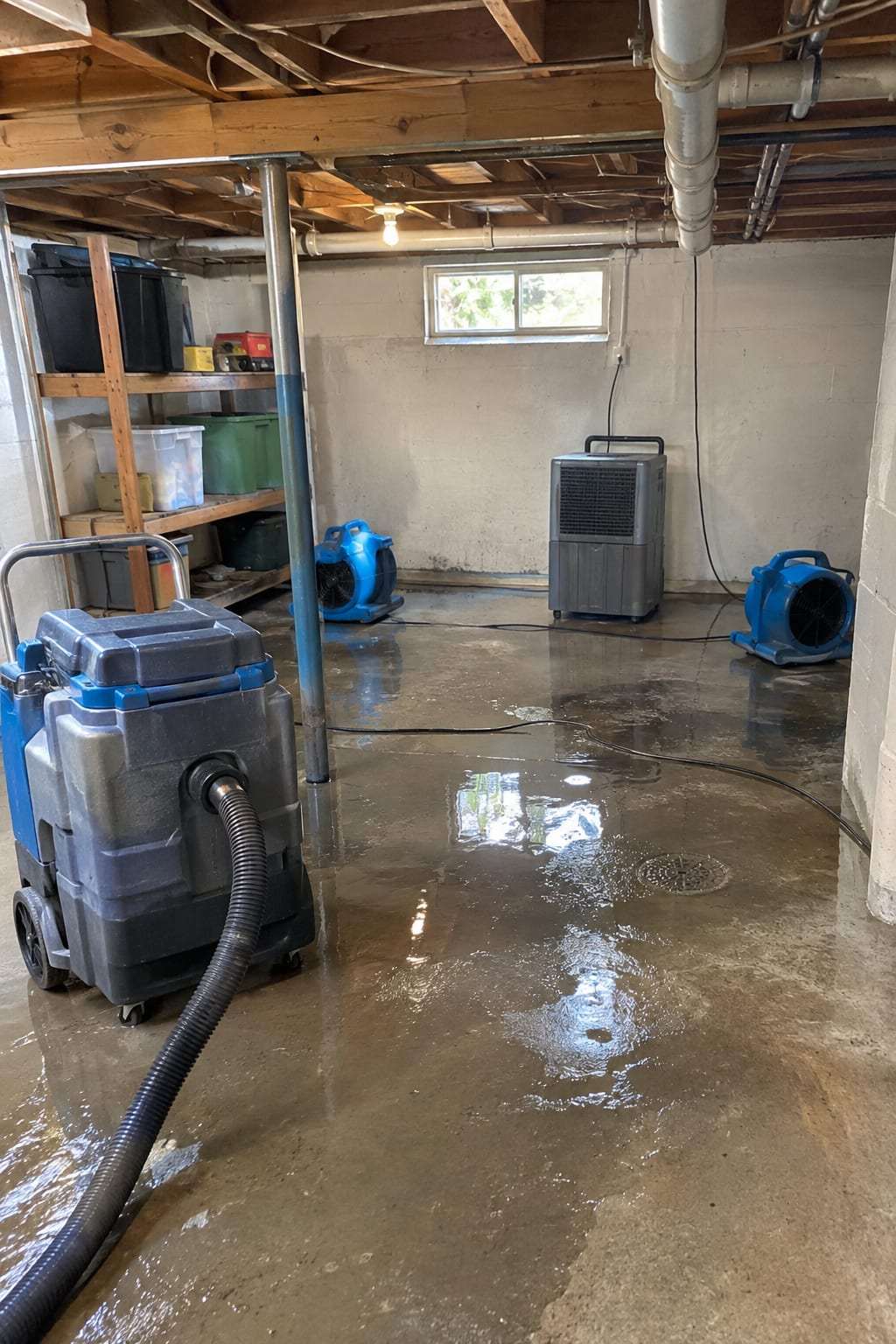
Standing water is pumped out first. Silt and debris get shoveled and squeegeed while the mud is still soft, because dried mud turns to dust.
-
Step 3: Cut out what soaked
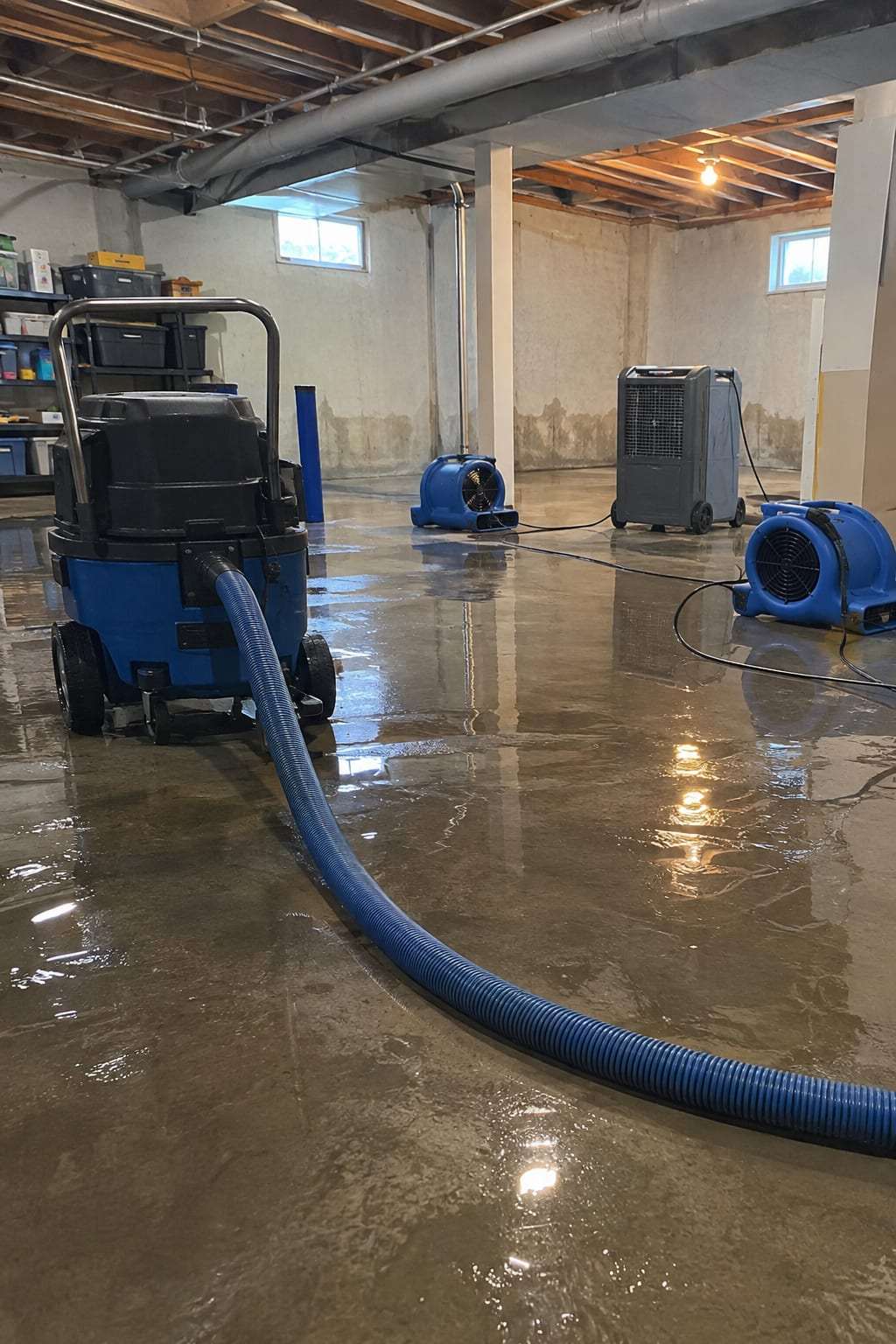
Wet drywall, insulation, carpet and pad come out below the water line and in a strip above it, so the wall cavity can be cleaned.
-
Step 4: Clean, disinfect, dry
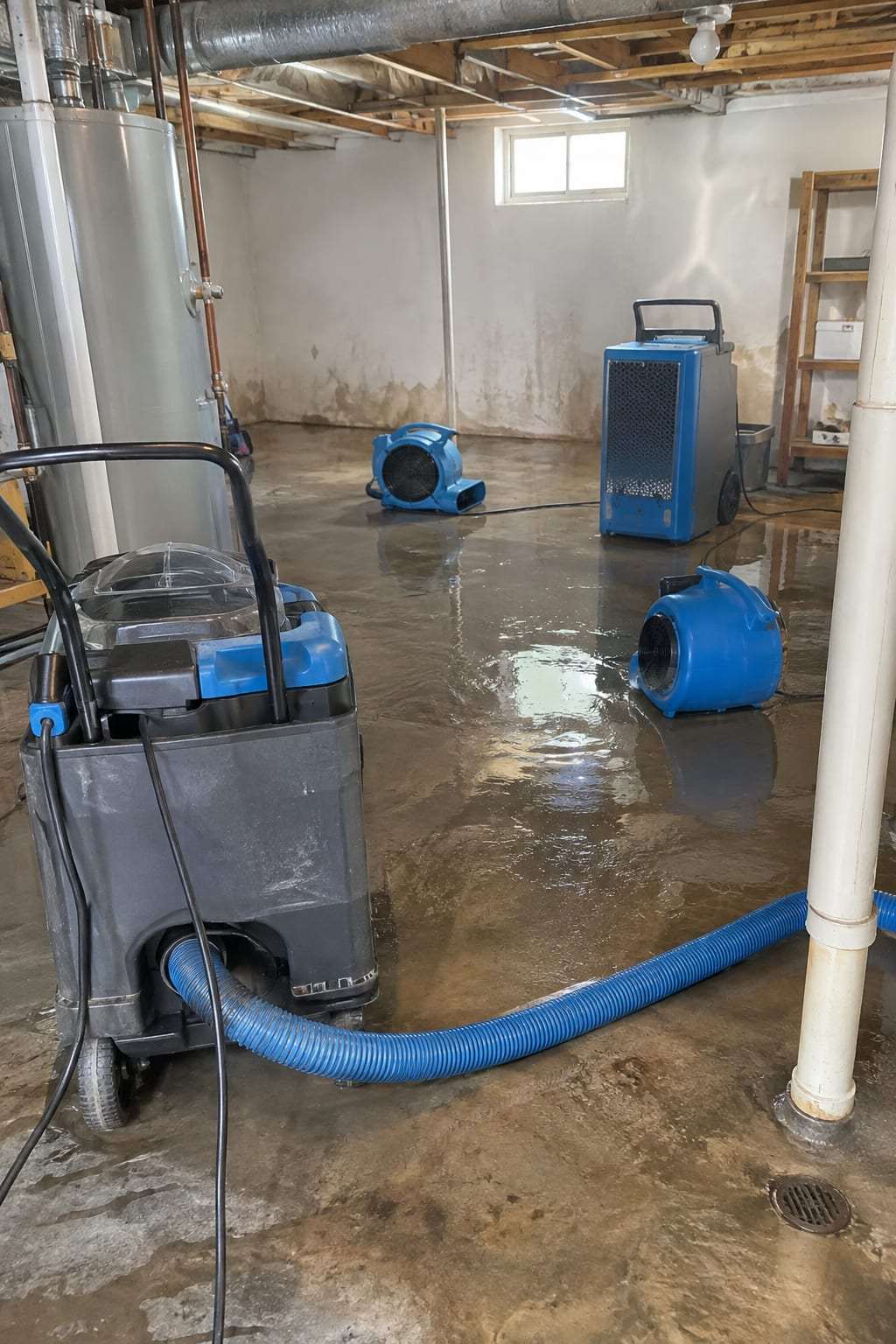
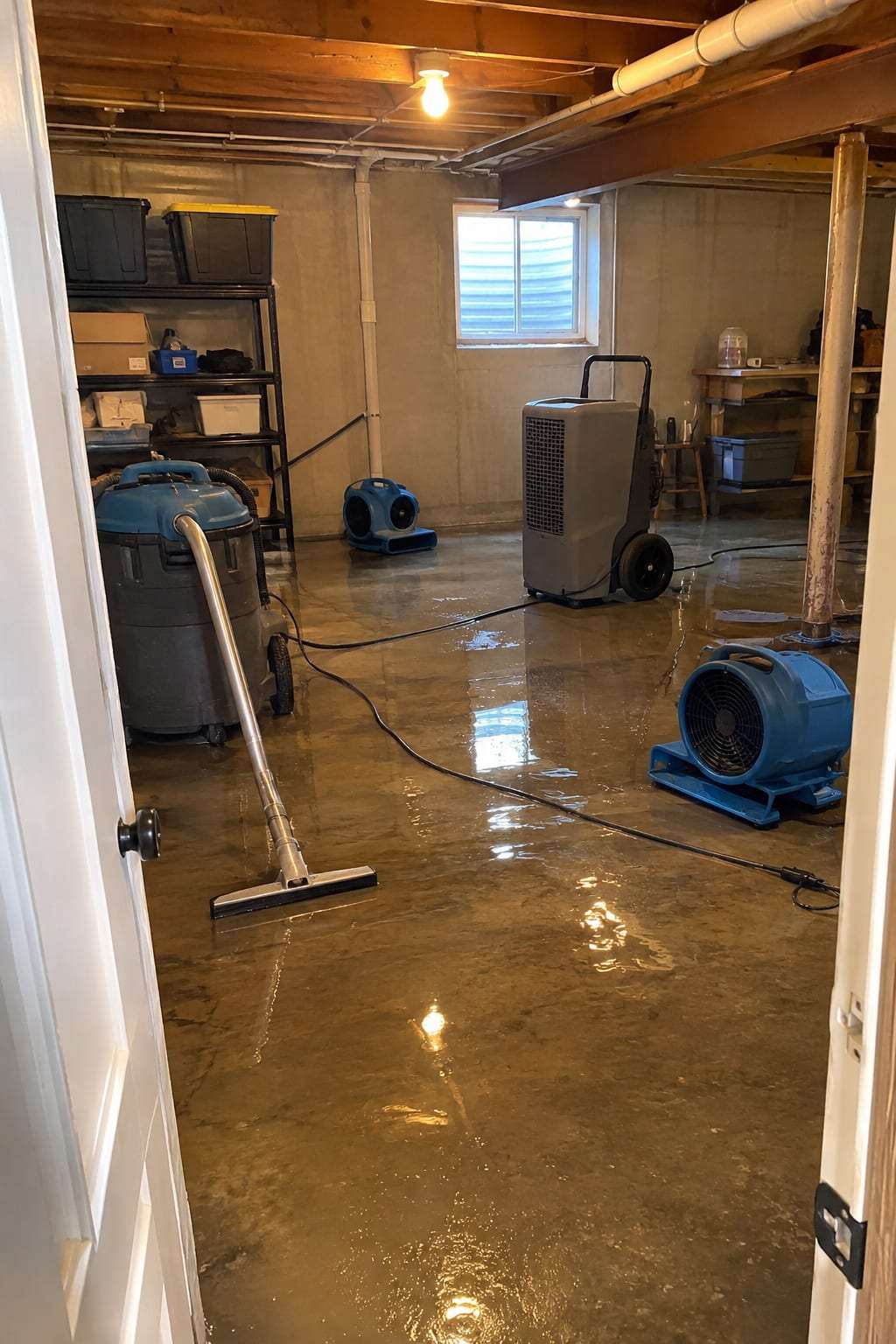
Hard surfaces are scrubbed and disinfected. Dehumidifiers and air movers then run while a moisture map is updated daily, and hardwood floors get drying mats so boards can be restored instead of replaced where possible.
-
Step 5: Rebuild
Drywall, flooring and trim go back only after the readings show the structure is dry and clean.
Measure before anything is moved
Moisture assessment and moisture mapping
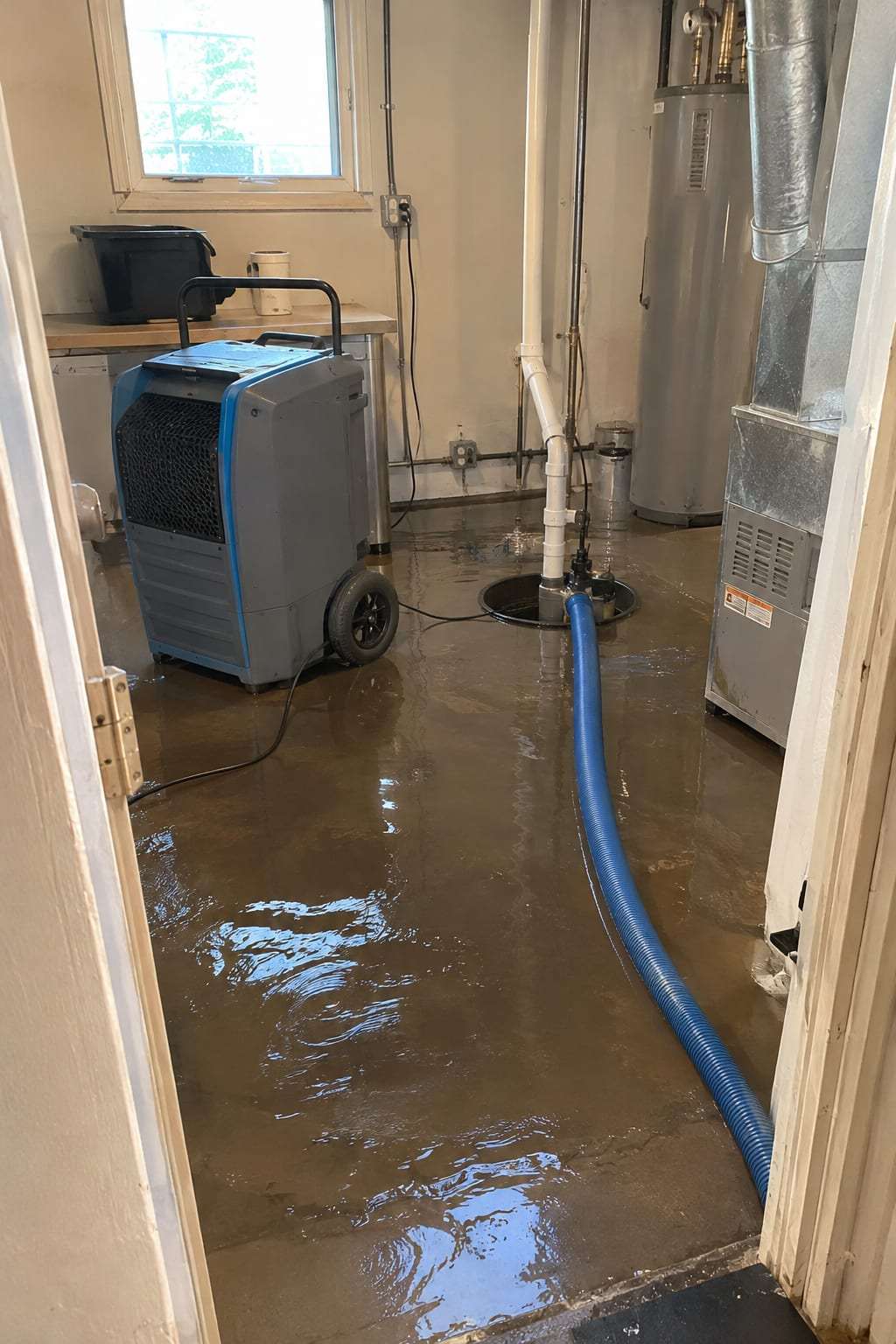
A good first visit measures the job before setting a single fan, then maps where the water went, room by room. Those numbers drive every decision after it, and they are what an adjuster will ask to see.
- Where the water came from, and whether it is still coming in
- The water category: clean, grey or contaminated. That decides what can dry in place.
- A moisture map: readings room by room, behind baseboards and under flooring
- Hardwood floors checked for cupping, so they can be dried in place or restored
- Thermal images of walls and ceilings where wet spots hide
- Photos of every affected area before anything is moved or torn out
- A written drying plan: equipment, what comes out, and when readings get rechecked
Inside the walls
What a wet building looks like once it is opened up
ZIP codes served: 80109 (Castle Rock), 80108 (Castle Rock), 80104 (Castle Rock).
Also nearby: 80134, 80116, 80131, 80124, 80130, 80118, 80126, 80125, 80112.
East Plum Creek and the hillsides
Why Castle Rock floods the way it does
Castle Rock sits on East Plum Creek, halfway between Denver and Colorado Springs, under the flat-topped butte the town is named for. It has grown fast, and many newer subdivisions climb hillsides and ridges, with walkout basements facing drainage swales and open space.
Most flooding here comes from summer thunderstorms that drop heavy rain in a short burst. Runoff overruns yard drainage and roadside channels, and walkout doors and window wells let it in. The Town of Castle Rock publishes its storm drainage and floodplain maps.
- Castle Rock is the Douglas County seat. Before you hire, confirm the company works in town.
- Standard homeowners policies usually exclude flood. A National Flood Insurance Program policy generally waits 30 days before coverage starts.
- Clear swales, window wells and yard drains of debris before the July storms arrive.
- Many restoration companies that serve Castle Rock are based elsewhere in the metro, so ask how long the drive takes.
Go deeper on Castle Rock floodwater
Guides, printable worksheets and local notes on storm water, drying and insurance paperwork.
Is it safe to clean up floodwater myself?
Floodwater can carry sewage, fuel and sharp debris, and a flooded building can hide live wiring and weakened floors. If you do the work, keep the power off, wear boots, gloves and eye protection, and wash well afterward. Anything beyond a small area calls for a crew with pumps and dehumidifiers.
Does homeowners insurance cover flood damage?
Usually not. Water that comes in from outside is typically covered only by a separate flood policy, such as one through the National Flood Insurance Program.
Why does drywall come out above the water line?
Drywall wicks water higher than the stain shows, and the insulation behind it stays wet. Cutting a foot or more above the line opens the cavity so it can be cleaned and dried.
Can a flooded furnace or water heater be used again?
Not until a qualified technician inspects it. Furnaces, water heaters and electrical equipment that sat underwater often need replacing.
How do I keep mold from growing after a flood?
Get the water and wet porous materials out fast, clean and disinfect, then run dehumidifiers until moisture readings are back to normal. Speed matters more than any product you spray.
Is flood cleanup different for a business?
Often. A shop or office can mean a larger area, carpet tile, stock on the floor and days of lost trade. Ask whether a company handles commercial or large-loss work before you hire it.
Will a restoration company come out to Castle Rock?
Many will, but plenty of the companies serving Castle Rock are based elsewhere along the Front Range. Confirm that a company works in town and ask for a realistic arrival time for your situation.
Right now
Water in the house right now?
Stay out until the power is off, photograph the damage and call your insurance agent. Then pick a cleanup company you have checked yourself. If anyone is in danger, call 911.
What a first call usually covers
Expect questions about how the water got in, how much floor it covered and whether the power is off. Ask when someone can realistically arrive, and get the scope and price in writing, backed by photos and moisture readings for your claim.
Request flood cleanup
This form is not connected. This website is a draft preview: no business has been confirmed to receive requests, so the fields below are switched off and nothing can be sent. In an emergency, call 911.